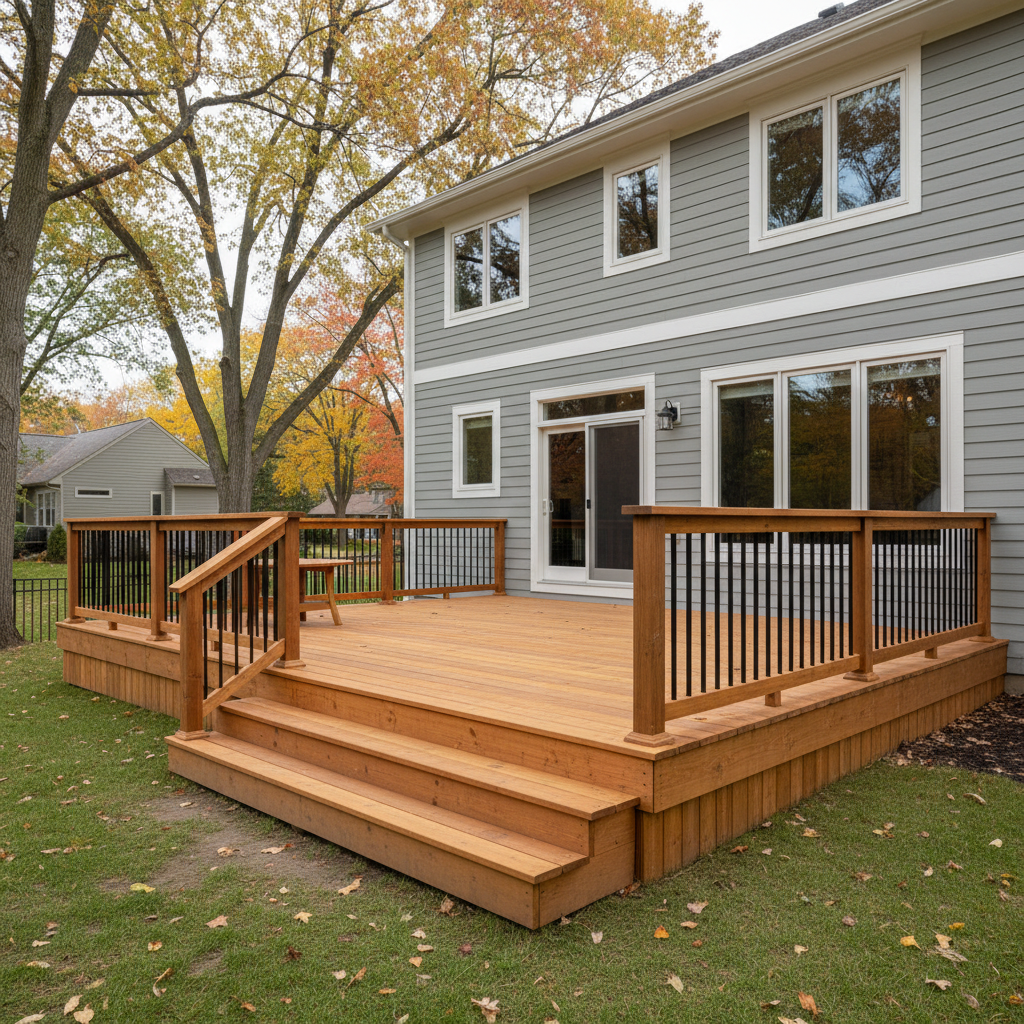
You're dreaming of that new wooden deck, right? A spot for grilling, relaxing, watching the kids play. It's a pretty big investment, and honestly, I see folks make some totally avoidable mistakes when they're planning these projects or hiring someone here in Minneapolis. As a local contractor, I've seen it all, and I want to help you dodge those headaches.
Not Thinking Enough About Wood Type and Grade
First off, too many people just say, “I want a wood deck,” and don't really dig into what kind of wood. You've got more options than just pressure-treated pine, which is common but often not the best choice for our Minnesota weather. Cedar, for instance, looks amazing and holds up well against rot and bugs, but it's softer, so it can dent easier. Then there's redwood—beautiful, yes, but expensive and sometimes tough to find locally. Even with pressure-treated lumber, you'll find different grades. Some are treated to a higher standard for ground contact, which is super important for posts or joists that might stay damp.
I've actually seen decks built with lower-grade lumber that warps and checks within a year or two, especially with our freeze-thaw cycles. You'll end up with splinters and an uneven surface way faster than you'd expect. Don't just assume your builder will pick the 'best' wood; ask questions, understand the good and bad points of each, and make a smart choice based on your budget and how long you want the deck to last without major problems.
Forgetting About How Much Maintenance a Deck Needs
This one's a big deal. A wooden deck isn't something you can just build and forget about, especially not here. Our harsh winters, followed by hot, humid summers, really put wood through its paces. I often hear people say, “Oh, I'll stain it every few years.” But it's more than just staining, believe me. You have to clean it regularly to stop mildew and algae from growing, particularly if your deck is in a shady spot, like many are in the older, tree-lined neighborhoods of South Minneapolis.
If you ignore it, the wood starts to gray, crack, and become prone to rot. Then you're looking at sanding, stripping, and possibly replacing boards, which is a much bigger job than just a good cleaning and a fresh coat of stain or sealant. So, factor in the time and cost of maintenance when you're picking wood. If you're not up for it, maybe composite is a better fit for you, but that's a whole different conversation.
Not Getting Specific About Fasteners and Hardware
This might sound like a tiny detail, but it's huge for how long your deck lasts and how safe it is. You wouldn't believe how many decks I've seen where they used the wrong fasteners. For outdoor wood projects, especially here where moisture is always a battle, you need screws and hardware that won't rust. Galvanized or stainless steel are the way to go.
If a contractor uses standard indoor screws or nails, they'll rust, stain your wood, and, more importantly, lose their grip. That means wobbly railings, loose boards, and a deck that's just not safe. Always ask what kind of fasteners they plan to use. If they can't give you a clear answer or try to cut corners here, that's a huge red flag. Elite Deck Solutions always makes sure we're using the right stuff, because safety and durability aren't things we compromise on.
Ignoring Proper Drainage and Airflow
Water is wood's worst enemy. A lot of homeowners, and sometimes even less experienced builders, don't pay enough attention to how water will act around and under the deck. If water pools against your house or underneath the deck, you're just asking for trouble. We're talking rot, mold, and even structural damage to your home's foundation.
Good drainage means sloping the ground away from the house, putting in proper flashing where the deck connects to the ledger board, and making sure there's enough space under the deck for air to move around. Ventilation is key to drying out the wood after rain or snowmelt. If your deck is too close to the ground without good airflow, it's going to stay damp, and that's a recipe for early decay. Make sure your contractor talks about these things with you and has a plan for handling water and airflow.
Forgetting About How You'll Actually Use the Space
People often focus on the deck itself, but don't think enough about how they'll really use the space. Are you planning on a big dining table? A hot tub? A fire pit? Where will the grill go? These things affect the size, shape, and even the structural needs of your deck. I've had clients who built a beautiful deck, then realized their patio furniture didn't fit, or there wasn't a good spot for their grill without scorching the siding—what a bummer.
Think about how people will move around. How will they get from the house to the yard? Will there be steps? Where will they be? Sketch out your furniture and activity zones on your deck plans. It's much easier to adjust a drawing than to rebuild a section of your deck because you didn't plan for that massive outdoor sectional you just bought.
Building a wooden deck is a fantastic way to improve your home, but going into it unprepared can lead to regret. Ask questions, do your homework, and don't be afraid to challenge assumptions. Your future self will definitely thank you for it.