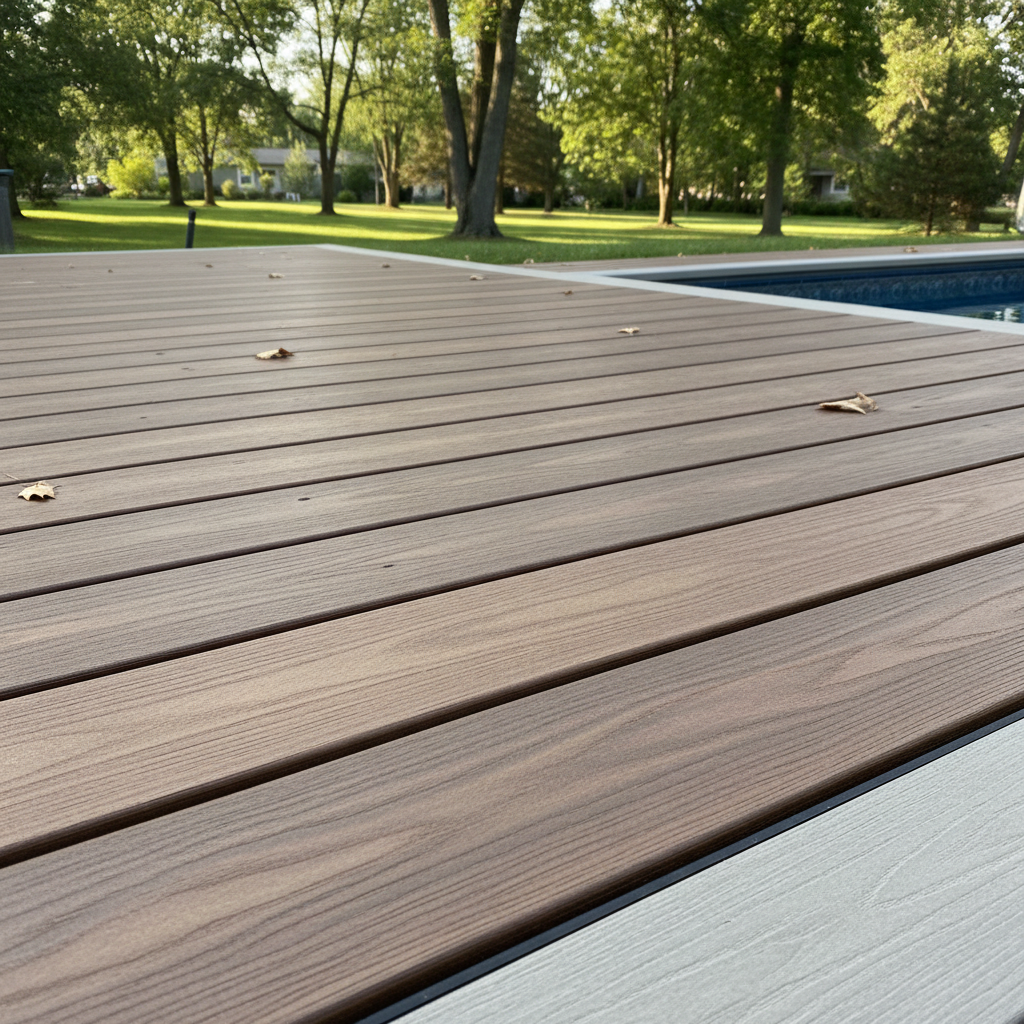
Got a pool, or maybe you're just thinking about putting one in? Then a pool deck is probably on your mind too. It's not just about finding a spot to lounge; it’s really about keeping things safe, making sure it lasts, and turning your backyard into a little oasis. I've built my fair share of these around Minneapolis, and I keep hearing the same questions come up. Let's get into them.
What's the best material for a pool deck in Minneapolis?
This is probably the question I get asked most often, and honestly, there's no single "best" answer that fits everyone. It really comes down to your budget, how much upkeep you're up for, and the overall look you're hoping for. Here in Minneapolis, with our climate, you've absolutely got to consider those freeze-thaw cycles, how much sun it'll get, and, of course, moisture. Concrete is a classic for good reason; it's tough, usually pretty affordable, and you can stamp or stain it to look quite sharp. Pavers are another solid choice. They give you a lot more design freedom and are easy to fix if one piece ever gets damaged. Then there's composite decking. It's super low maintenance, won't give you splinters, and resists fading. It usually costs more upfront, sure, but you'll save money by not having to stain and seal it every couple of years. Natural wood, like cedar or redwood, can look absolutely stunning, but it needs more attention – regular sealing is a must to stop rot and splinters, especially with all the splashing that happens around a pool.
How important is proper drainage around a pool deck?
Crucial. Seriously, it's absolutely critical. You definitely don't want water sitting on your deck or, even worse, pooling up against your house's foundation. Here in Minneapolis, with our heavy spring rains and all that snowmelt, good drainage isn't just nice to have; it's a total necessity. We always design pool decks with a slight slope, angling away from the house and the pool itself. This directs water towards a proper drainage system or a permeable area. Sometimes that means putting in trench drains, or just making sure the landscaping around the deck is graded correctly. Without it, you could be looking at potential structural damage to the deck, erosion, or even foundation problems for your home. It's one of those things you just don't cut corners on.
What kind of maintenance does a pool deck require?
Again, it really depends on what material you pick. Composite decks are the easiest; usually, just a good scrub with soap and water a couple of times a year is all they need. You might see some mildew in shadier spots, but it cleans up just fine. Concrete and pavers are pretty low-maintenance too, but you'll want to seal them every few years to protect against stains and the weather. Wood decks are the most demanding. You're looking at cleaning, sanding, and then re-sealing or re-staining every 1 to 3 years, depending on the wood type and how much sun it gets. And for any material, make sure to keep it clear of leaves and other stuff, especially in the fall, to prevent staining and moisture buildup. A quick sweep often goes a long way, you know?
Do I need a permit for a pool deck in Minneapolis?
Yep, almost certainly. Any deck, especially one built around a pool, usually needs a building permit from the city of Minneapolis. This isn't just about jumping through hoops; it's there to make sure your deck is built safely and meets all the codes. They'll check things like how strong the structure is, how far back it is from property lines, and safety features like railings and gates. Don't even think about skipping this step. If you work with Elite Deck Solutions, we handle all the permit applications and inspections. It saves you a massive headache and makes sure everything's done right from day one.
What safety features should I include for a pool deck?
Safety around a pool isn't something you can compromise on, especially if you have kids or pets running around. Railings are a big one, and they're often required by code. You need to make sure they're at the right height and that the baluster spacing is narrow enough so a child can't squeeze through. Gates need to be self-closing and self-latching, opening outwards, and the latch itself should be out of a child's reach. Non-slip surfaces are also super important. Many materials, like stamped concrete or certain composites, offer good traction, but you can also add anti-slip coatings or strips if you want. Good lighting around the deck for nighttime use is another really smart safety feature.
How long does a pool deck installation typically take?
That's a tough one to give you a precise number for, because it really varies quite a bit. A small, simple concrete slab might be a week or two once we actually get started. A larger, multi-level deck with composite materials, custom railings, and built-in features could easily take 3 to 6 weeks, or even longer. Things like the weather (our Minnesota springs can be pretty unpredictable, right?), how available materials are, and how complex the design is all play a role. We always give our clients a realistic timeline upfront, and we do our absolute best to stick to it. The goal is always a quality job, not just a fast one.
Building a pool deck is a pretty big investment, and you want to be sure it's done correctly. Don't hesitate to ask your builder all these questions and more. A good contractor will be transparent and happy to walk you through the entire process.